

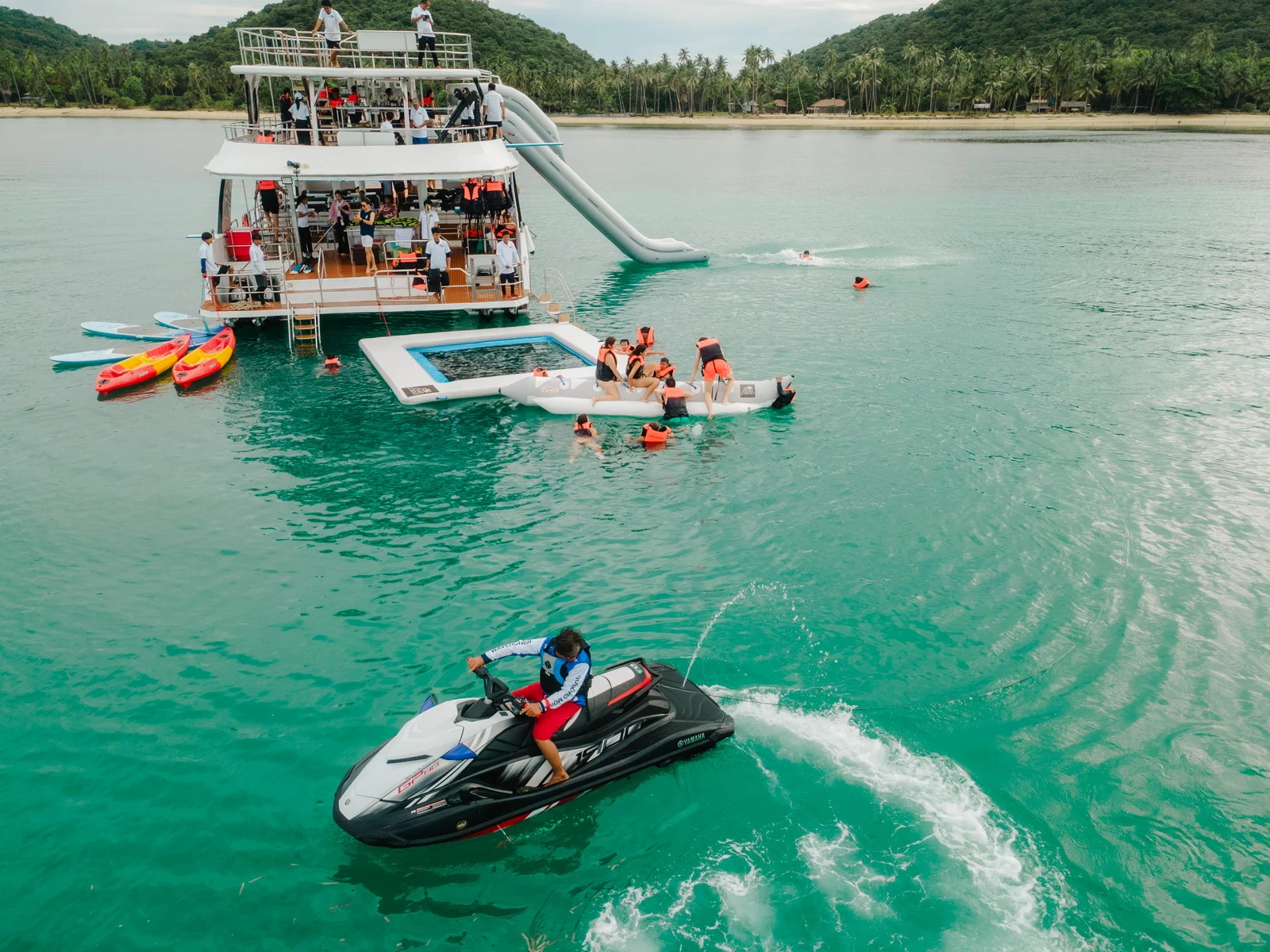
Koh Tan (also spelled Koh Taen) is where many people near Koh Samui put their face in the sea for the first time. The reef is shallow, close to shore and usually sheltered, so Koh Tan snorkeling for beginners works even if you are not a strong swimmer. A first snorkel goes much better, though, if you know what you are looking at and have a simple plan for staying safe.
Quick answer: Koh Tan suits beginners because its fringing reef is a few metres deep and close to shore. Wear a life jacket, stay near the boat with a buddy, float rather than stand, and touch nothing. Look for striped sergeant majors, butterflyfish in pairs, parrotfish crunching on rock, small schools of rabbitfish and the odd giant clam. The main hazards are sunburn, tiredness, sea urchins and, rarely, jellyfish.
Below are the fish you are most likely to meet and a routine for your first swim. For mask fitting, clearing your snorkel and the island itself, read our full Koh Tan snorkelling guide.
Why Koh Tan snorkeling for beginners makes sense
- Shallow water. Much of the reef sits a few metres down, so you see colour and detail without diving.
- Close to shore. The reef runs along the edge of the island, so boats can anchor near the coral.
- Usually sheltered. On the day, the crew picks the calmer side of the island.
- Somewhere to rest. From a big boat you can climb out, sit down and go back in as often as you like.
Keep your expectations realistic. This is a relaxed, near-shore reef, not a deep wall. Visibility changes with wind and rain, and some patches of coral are in better shape than others. Our round-up of the best snorkelling around Koh Samui compares it with other spots.
Fish you’re likely to see
No two swims are the same. Treat this as a guide to the groups most often seen on shallow reefs in this part of the Gulf of Thailand, not a guaranteed checklist. Reef surveys elsewhere in the Gulf found damselfish to be the most numerous family (ScienceAsia, 2002), so start with those.
Sergeant majors and other damselfish
These are the easiest fish to spot. They are silvery to yellowish with five bold black vertical bars and grow up to about 20 cm long. The Indo-Pacific sergeant (Abudefduf vaigiensis) lives from the surface down to around 15 m and gathers in loose groups in mid-water (FishBase). Males guard eggs laid on rocks and may dart at you if you hover nearby. It looks bold but does no harm, so just move on. Smaller damselfish in blues, browns and yellows hang over single coral heads and defend them fiercely.
Butterflyfish
Butterflyfish are flat, disc-shaped and often yellow and white with dark bands, and they usually swim in pairs. Some species, such as the eightband butterflyfish (Chaetodon octofasciatus), feed almost entirely on coral polyps (FishBase), so if you see them, there is living coral nearby.
Parrotfish
Parrotfish get their name from their beak-like mouths, which they use to scrape algae off rock and dead coral. When the water is quiet you may hear a faint crunching. They grind the rock up and pass it out as fine sand, and on healthy reefs they help stop algae smothering the coral (Wikipedia: parrotfish). Look for blue-green or pinkish fish grazing along the bottom.
Rabbitfish (look, don’t touch)
Rabbitfish, also called spinefoots, have soft, rabbit-like faces and move in small groups over rock and seagrass. Species such as the streaked spinefoot (Siganus javus) are found in Thailand and carry venomous fin spines (FishBase). They will not come after you. Just never try to grab or corner one.
Wrasses, including cleaners
Wrasses are slim, colourful and always on the go. Watch for a small blue-and-black striped fish hovering next to a bigger one. That is probably a bluestreak cleaner wrasse (Labroides dimidiatus), which picks parasites and dead skin off other fish at fixed “cleaning stations” (Wikipedia: cleaner wrasse). Float still for a minute and you may see fish line up for a turn.
Not fish, but worth spotting
- Giant clams. Look for wavy, brightly coloured lips set into the coral. Thai wildlife law protects them, and in 2019 a TV crew faced police complaints after a celebrity harvested giant clams in a Thai national park (Korea JoongAng Daily). Look and take photos, but never touch.
- Long-spined sea urchins. Black, with spines that can be longer than your finger. The porcupine sea urchin (Diadema setosum) is classed as venomous and hides in crevices during the day (SeaLifeBase). They are the main reason not to stand up on the reef.
Your first 15 minutes: a beginner’s routine
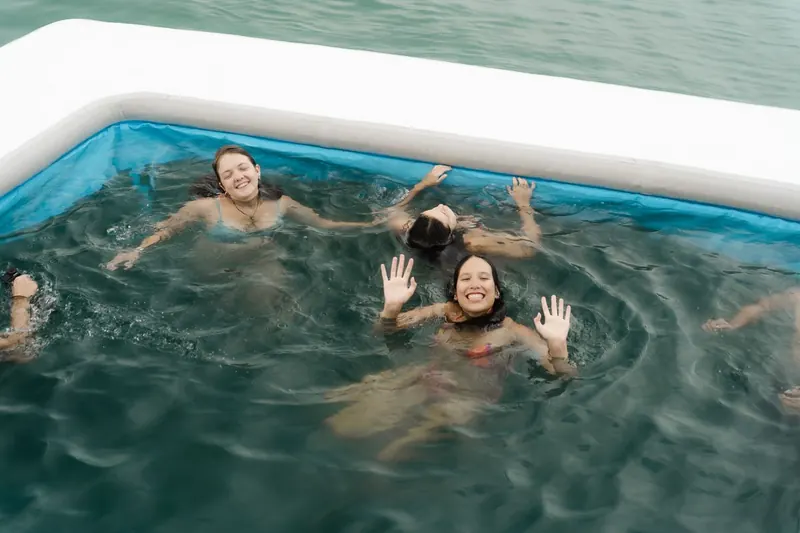
- Gear on deck, not in the water. Fit the mask, adjust the strap and put your life jacket on before you climb down.
- Go in by the ladder, not by jumping, until you know how you feel in the water.
- Hold the ladder or a float and breathe. Face in the water, slow breaths through the snorkel for a full minute.
- Pick a landmark. Note where the boat sits against the island before you swim off.
- Stay with a buddy and inside the area the crew points out.
- Swim slowly with the current first, so the way back is the easy part. If you feel yourself drifting, lift your head and wave.
- Come back after 15–20 minutes, rest, drink some water and go again. A few short swims beat one long, tiring one.
Safety: what tends to go wrong
Sunburn
Floating face-down leaves your back and the backs of your legs in the sun for a long time. A rash vest or a light long-sleeved top protects you better than sunscreen alone, and it is much kinder to the reef.
Tiredness and drifting
Snorkelling feels easy until you turn round into a current. The life jacket holds you up without any effort, so you can stop and rest at the surface whenever you need to. Be careful in the water in general. The UK government’s travel advice says people have drowned in strong currents off Thai coasts, especially in the monsoon season (GOV.UK).
Coral cuts and urchin spines
Both happen when people stand up or kick near the bottom. Float, keep your fins up over shallow coral, and if you do get a cut, tell the crew so it can be cleaned properly.
Jellyfish
Jellyfish can turn up in Thai waters, and the UK government advises following local guidance because some stings can be fatal. Dangerous box jellyfish do occur around Samui and Koh Phangan, but they are rare. One study counted 15 severe cases on the two islands between 1997 and 2015, mostly between July and October (Thaikruea and Siriariyaporn, BMC Research Notes, 2016). If you are stung, get out of the water and tell the crew straight away. Thai marine experts advise pouring vinegar over the area for at least 30 seconds, and not rinsing it with fresh water, putting ice on it or rubbing it (Pattaya Mail, August 2025). Then get medical help.
Panic
It usually starts with a leaking mask or a mouthful of water. Lift your head, hold on to your life jacket or the boat, breathe normally, then sort the mask out. Nobody minds if you take a break.
Reef manners in one minute
Green Fins is an international code of conduct for dive and snorkel operators, started by the UN Environment Programme in 2004 with Thailand among the first countries to join. It boils down to a few habits. Do not touch or stand on coral, do not chase or feed marine life, and do not take anything away (Wikipedia: Green Fins). Fish act more naturally around calm, still snorkellers, so good manners get you better sightings too.
Children and nervous swimmers
Children should wear a life jacket in the water at all times and stay within arm’s reach of an adult. A good first step is to float beside the ladder, face in the water, and spot the fish under the boat. Our family boat trip guide covers safety on board, and our guide to Koh Samui with kids has more ideas by age group.
Try Koh Tan with a crew looking out for you.
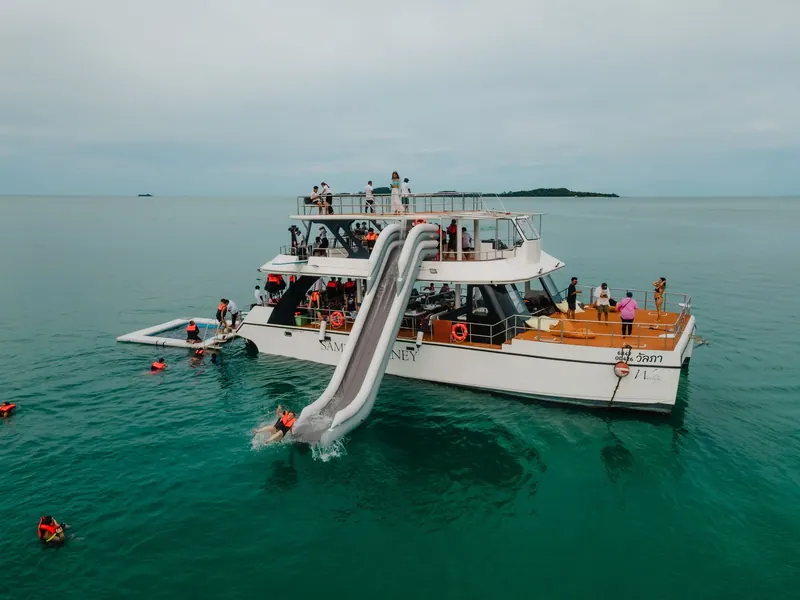
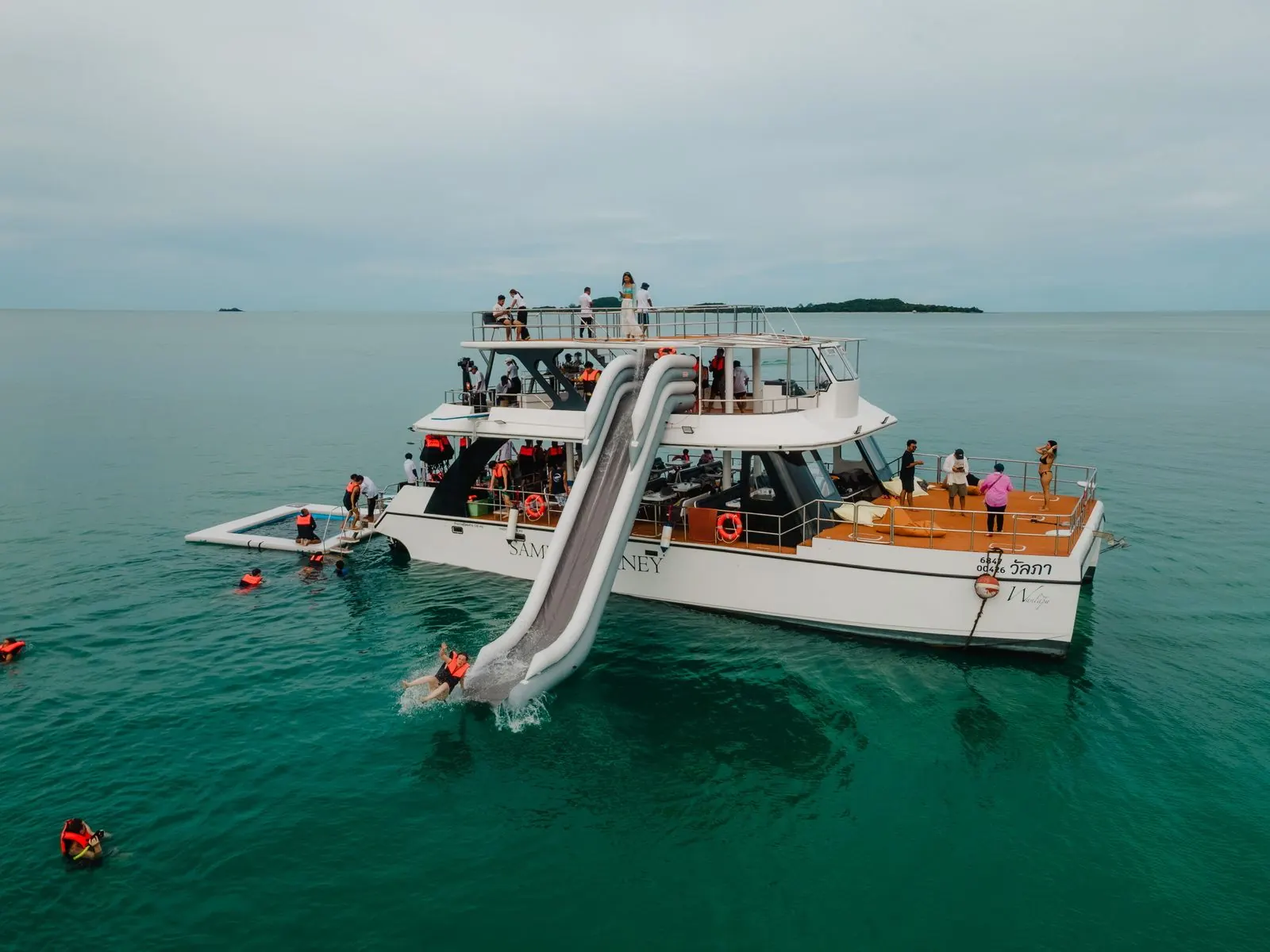
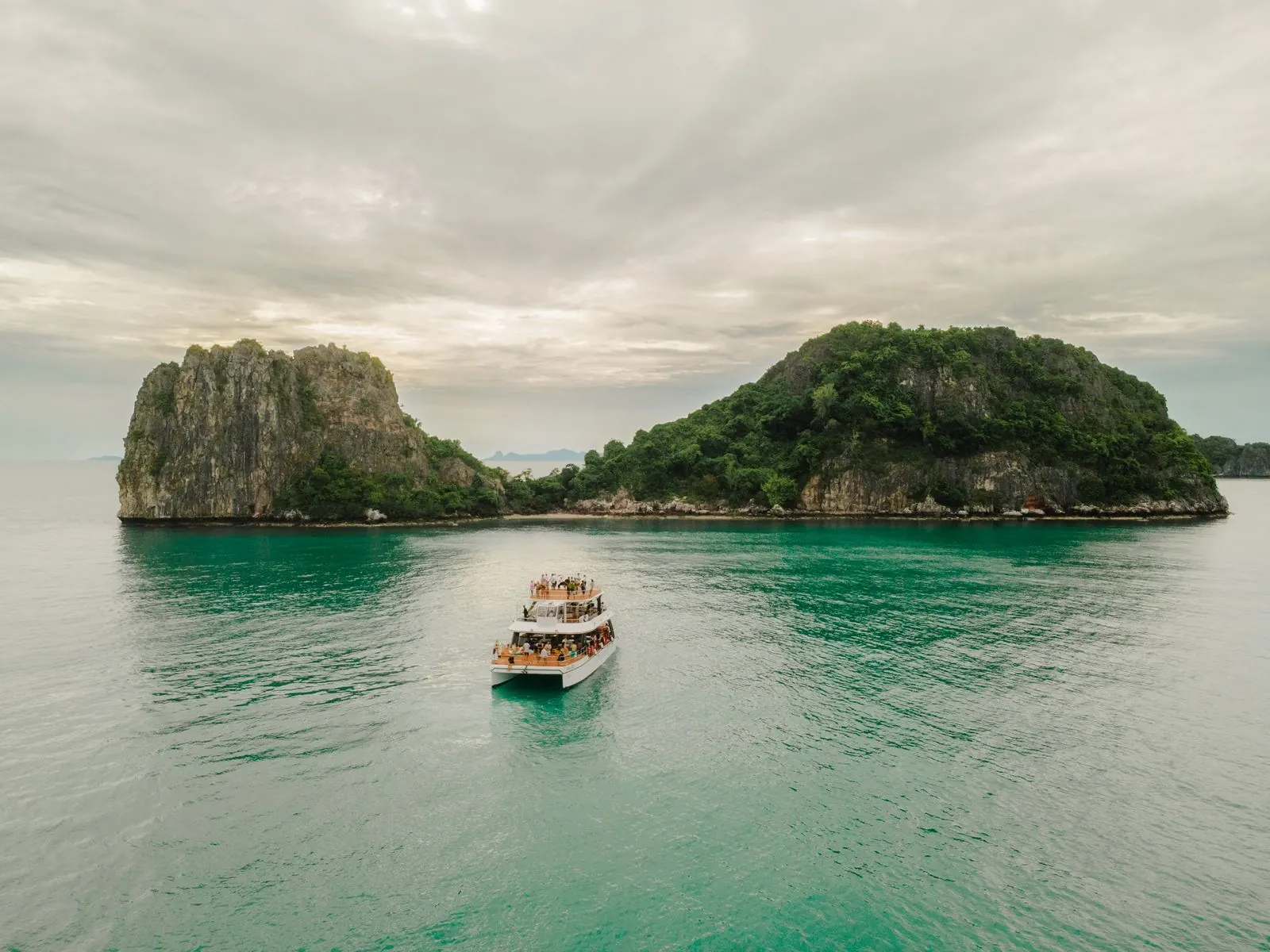
The Samui Journey 1-Day Catamaran includes a snorkelling stop at Koh Tan, plus the Five Islands and Pig Island. A licensed captain with 10+ years’ experience, life jackets and a first-aid kit on board; lunch, drinks, accident insurance and hotel transfers included. Adults (12+) ฿3,300, children (5–11) ฿1,900, under-5s free. Check availability or WhatsApp +66 94 751 4988.
FAQ
Can non-swimmers snorkel at Koh Tan?
Yes, if they wear a life jacket and stay close to the boat. The jacket does the floating, so all you do is breathe through the snorkel and look down.
Will the fish bite?
Not in any way that hurts you. Damselfish guarding eggs or a patch of coral may dart at you or nip a finger, which is a surprise but harmless. Swim on and they lose interest.
When is the water clearest?
Usually on calm days in the drier months. Koh Samui’s heaviest rain normally falls from about mid-October to early December. Our month-by-month weather guide has the details.
Should I bring my own mask?
Yes, if you own one that fits well. A mask that does not leak makes the biggest difference to comfort, and if you wear glasses, a prescription mask is worth packing.
Do I need fins?
They help, but you do not need them at Koh Tan. With a life jacket you can float and paddle gently. If you do wear fins, keep them high over shallow coral so you do not kick it.
 Islands & boats