


Samui is warm all year, so the best time to visit Koh Samui comes down to rain and the state of the sea. The island is on the Gulf of Thailand side of the country, and its weather runs on a different clock from Phuket and the Andaman coast. That catches a lot of visitors out.
In short, February to April is the most reliable stretch for sunshine and calm water. May to September is warmer, with short showers, and often a good time for boat trips. October to December is the main rainy season, and November is the wettest month. The numbers are below, along with what they mean month by month and how to plan a boat day around them.
Quick facts
| Driest month | February (about 64 mm of rain, around 4 rainy days on average) |
| Wettest month | November (about 445 mm, around 16–17 rainy days) |
| Hottest months | April to August (average highs around 32–33°C) |
| Sunniest months | February and March (around 7.5 hours of sunshine a day) |
| Main rainy season | Mid-October to early December |
| Ang Thong Marine Park | Usually closed 1 November to 15 December |
| Climate data | World Meteorological Organization averages for Koh Samui, 1991–2020 |
Koh Samui weather by month at a glance
Averages for Koh Samui, 1991–2020. “Rainy days” are average days per month with measurable rain.
| Month | Avg high | Avg low | Rainfall | Rainy days | Sun (hrs/day) | Boat-trip outlook |
|---|---|---|---|---|---|---|
| Jan | 29.0°C | 24.2°C | 127 mm | 8.5 | 6.4 | Improving, though leftover swell is possible early in the month |
| Feb | 29.4°C | 24.9°C | 64 mm | 4.3 | 7.6 | Excellent |
| Mar | 30.4°C | 25.4°C | 116 mm | 4.7 | 7.7 | Excellent |
| Apr | 31.8°C | 26.0°C | 83 mm | 6.1 | 6.7 | Very good, but hot |
| May | 32.9°C | 25.7°C | 132 mm | 11.0 | 6.2 | Good, with short showers |
| Jun | 32.7°C | 25.3°C | 134 mm | 10.3 | 5.0 | Good |
| Jul | 32.3°C | 25.1°C | 117 mm | 10.7 | 5.0 | Good |
| Aug | 32.4°C | 25.1°C | 102 mm | 10.5 | 4.9 | Good |
| Sep | 31.9°C | 24.8°C | 118 mm | 10.6 | 4.8 | Good, but watch for windy spells |
| Oct | 30.6°C | 24.3°C | 295 mm | 15.8 | 4.7 | Mixed, and worse late in the month |
| Nov | 29.7°C | 24.1°C | 445 mm | 16.5 | 5.8 | Frequent cancellations likely |
| Dec | 29.3°C | 24.0°C | 263 mm | 11.6 | 5.7 | Mixed, better in the second half |
Don’t read too much into the rainfall totals. A high monthly figure can come from a few heavy downpours. March averages 116 mm, for example, but on under five rainy days. Outside the monsoon months, most showers on Samui are short and pass within the hour.

Why Samui’s seasons differ from Phuket’s
Thailand has two monsoons. The south-west monsoon (roughly mid-May to mid-October) brings the Andaman coast its long wet season, and Phuket’s rainiest months run from May to October. Koh Samui, on the other side of the peninsula, gets far less rain at this time. Long-term averages put it at roughly 100–135 mm a month, against roughly 210–360 mm in Phuket.
The north-east monsoon (roughly mid-October to mid-February) is the one that matters for Samui. As it arrives it brings heavy rain to the Gulf coast of southern Thailand, peaking around November. Across the whole year, Samui is a little drier than Phuket.
So a European summer holiday in July or August usually suits Samui better than Phuket. Between late October and early December it flips, and the Andaman side tends to be the drier choice.
Best time to visit Koh Samui, month by month
January
The tail end of the rainy season. Early January can still bring showers and lumpy seas, but conditions usually settle as the month goes on. Ang Thong has normally reopened by mid-December.
February
The driest month on average and one of the sunniest. Seas are generally calm, so it is one of the best months for any boat trip. It is also busy, so book tours a few days ahead.
March
Sunshine peaks and the heat starts to build. Rain usually comes as the odd heavy shower rather than grey days. The Thai National Parks guide to Ang Thong points to March and April for clearer water.
April
Hot, often calm and bright. Mid-April brings Songkran, the Thai New Year water festival, so expect water fights in busy areas. Bring a hat and plan swims for the morning and late afternoon if the heat bothers you.
May
The warmest average highs of the year. The south-west monsoon begins, but on Samui it mostly shows up as short showers rather than washed-out days. Generally a good, quieter month for boat trips.
June, July and August
Hot, with around ten rainy days a month, though most are brief. Sunshine hours dip as clouds build, but the sea on Samui’s south side is often calm enough for island-hopping. July and August are often busy with families on school holidays.
September
Much like August, and usually quieter. Now and then the Thai Meteorological Department issues strong-wind and high-wave warnings for parts of the Gulf, so watch the forecasts and your tour operator’s updates.
October
Rainfall more than doubles compared with September, and the north-east monsoon arrives in the second half of the month. Plan boat days with flexible dates, especially later in October.
November
The wettest month, with long rainy spells, strong winds and rough seas at times. Ang Thong Marine Park is usually closed from 1 November. Boat trips run only when conditions are safe, so many days are better spent on land.
December
The first half is often still wet, and the second half usually improves. Ang Thong normally reopens around mid-December. Christmas and New Year are among the busiest weeks of the year, so book early.
Planning your boat day for the dry season?
The Samui Journey 1-Day Catamaran visits the Five Islands, Koh Tan and Pig Island, with lunch, free-flow drinks, snorkel gear and hotel transfers included. Adults ฿3,300, children (5–11) ฿1,900, under-5s free. Check dates and availability.
Planning boat trips around the weather
- Book your boat day early in your stay. If the weather forces a change, you still have days to reschedule.
- Watch the wind as well as the rain. A sunny day with strong wind can be rougher on the water than a cloudy, still one. Boats sail or stay in port because of waves and wind.
- Know the policy. On the Samui Journey catamaran, the team checks conditions every day. If it is not safe, we contact you in advance by WhatsApp, LINE or email and move you to another date free of charge. If the new date is also affected, you get a full refund. Full details are in our weather and refund policy.
- Pick the right trip for the season. Ang Thong means a longer open-water crossing and closes for six weeks every year. Trips to the islands off Samui’s south coast make shorter hops. Our Ang Thong or Pig Island comparison explains the trade-offs.
- Snorkellers: visibility is generally best in the calmer months. See our guide to the best snorkelling spots.

A plan for rough-sea days
When the sea is too lively for a boat, it is easy to swap in a land day.
- Samui Elephant Kingdom: about three hours at an ethical elephant sanctuary we support, with morning or afternoon hotel pickup. You learn what elephants eat, make “Powerball” elephant food and feed the elephants from the Skywalk. Lunch and soft drinks are included. Adults ฿3,000, children (5–11) ฿1,700, under-5s free.
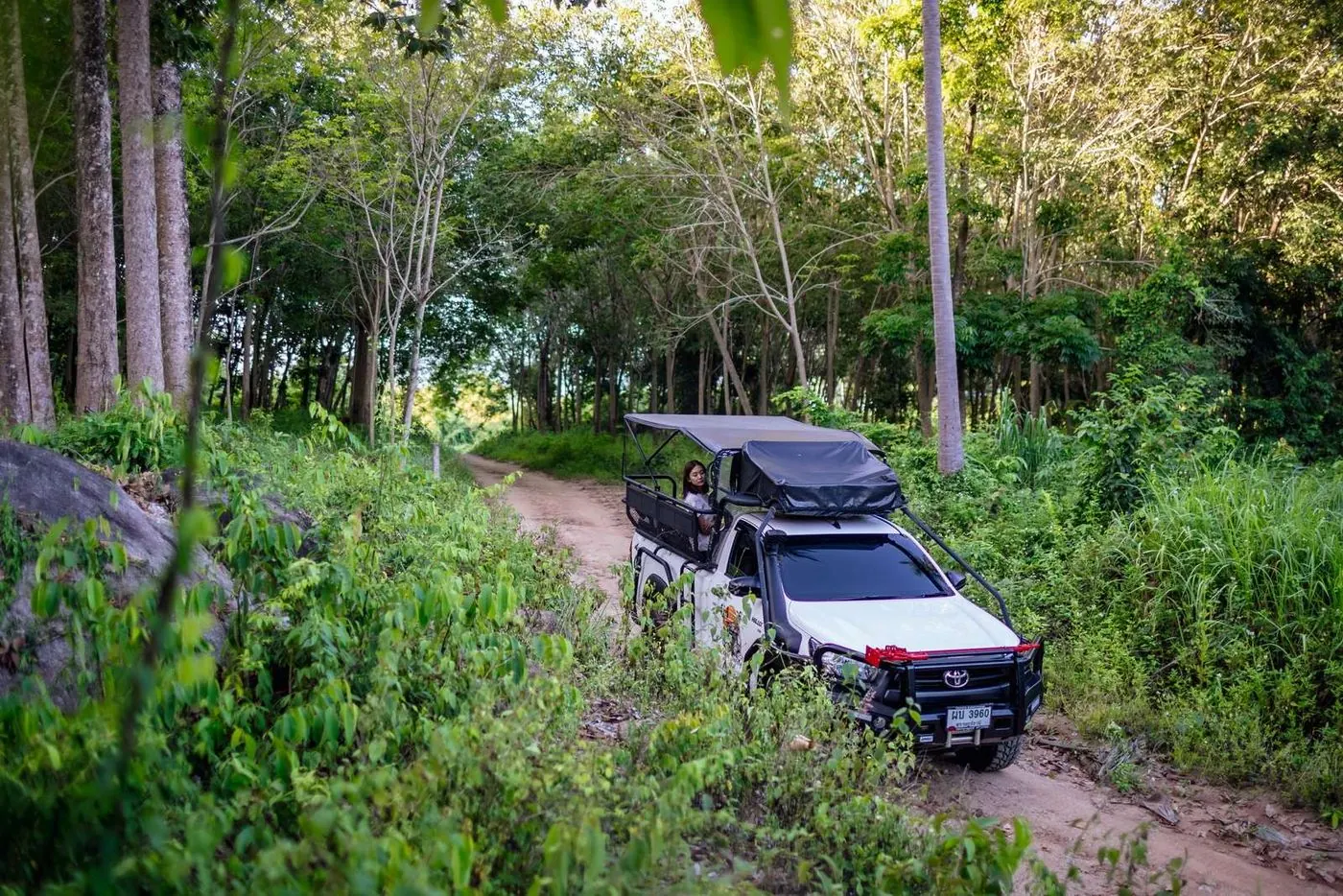
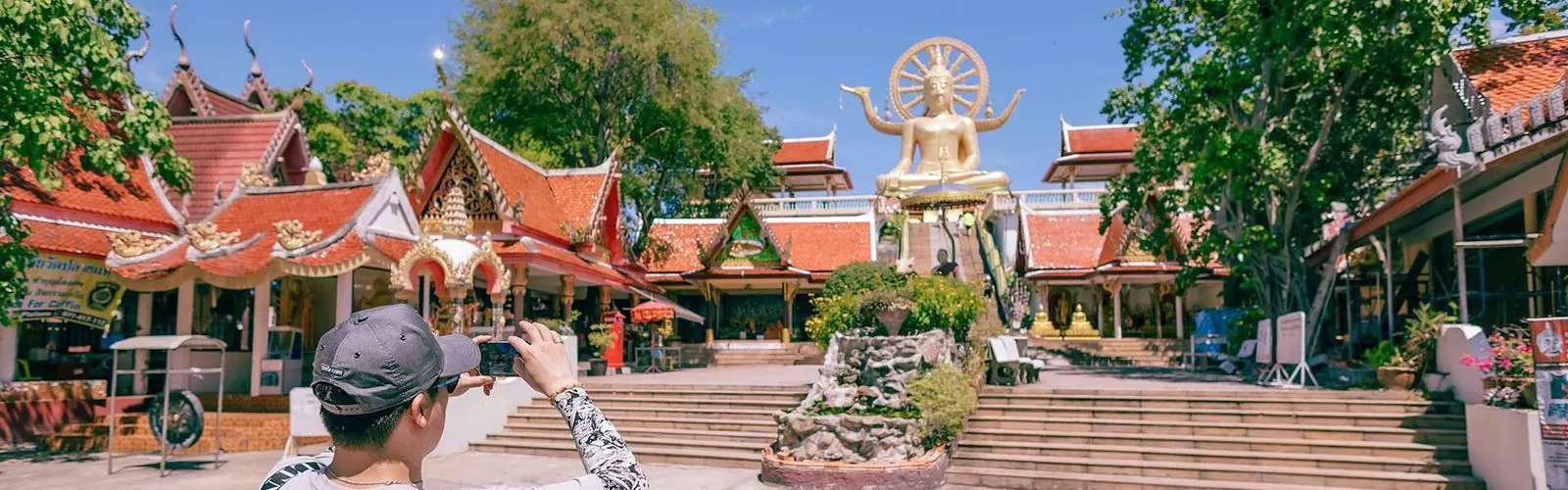
- Explore the Real Samui 4×4 Island Safari: a full day in a 4×4 pickup, stopping at the Big Buddha Temple, a village experience in Chaweng, Namuang Waterfall, a rubber-tapping demonstration and Grandfather and Grandmother Rocks. Lunch is included, and the itinerary may change with the weather. Adults ฿1,950, children (5–11) ฿1,650, under-5s free.
Good to know
- Climate averages are not forecasts. Dry months can have stormy days and wet months can have sunny weeks. Check the forecast a few days out.
- Jellyfish: Thailand’s Department of Marine and Coastal Resources has warned that jellyfish risk around Koh Samui is higher from July to December. Many beaches have an orange pole with vinegar and first-aid instructions.
- Sun strength: even in the “cooler” months, highs sit around 29°C and the sun is strong on the water. Our boat day packing checklist covers sun protection.
- Ang Thong dates change slightly each year. The park usually closes from 1 November to 15 December, but the exact dates are announced annually and can shift with the weather.
Ready to pick your date?
Message us on WhatsApp at +66 94 751 4988 and we will tell you how the sea is looking, or book the 1-Day Catamaran online. Free cancellation up to 24 hours before pickup. Samui Journey Co., Ltd., TAT License No. 44/00252.
FAQ
What is the best month to visit Koh Samui?
February. It is the driest month on average, and March is just as sunny. For the best mix of dry weather and calm seas, aim for February to April.
What is the rainy season in Koh Samui?
The main rainy season runs from about mid-October to early December, with November the wettest month. The rest of the year has mostly short showers.
Is Koh Samui good to visit in July and August?
Usually, yes. It is hot with frequent but short showers, and the sea is often calm enough for boat trips. Samui is generally drier than Phuket during these months.
Can you do boat trips in Koh Samui in November?
Sometimes. Boats sail only when conditions are safe, and November has the most rough-sea days. Ang Thong Marine Park is usually closed from 1 November to 15 December. Keep your dates flexible and have a land plan ready.
When is Ang Thong Marine Park closed?
Usually from 1 November to 15 December each year, for environmental recovery during the monsoon. Exact dates are announced annually.
Is Koh Samui hot all year?
Yes. Average highs range from about 29°C in December and January to about 33°C in May, with nights around 24–26°C.


 Plan your trip