

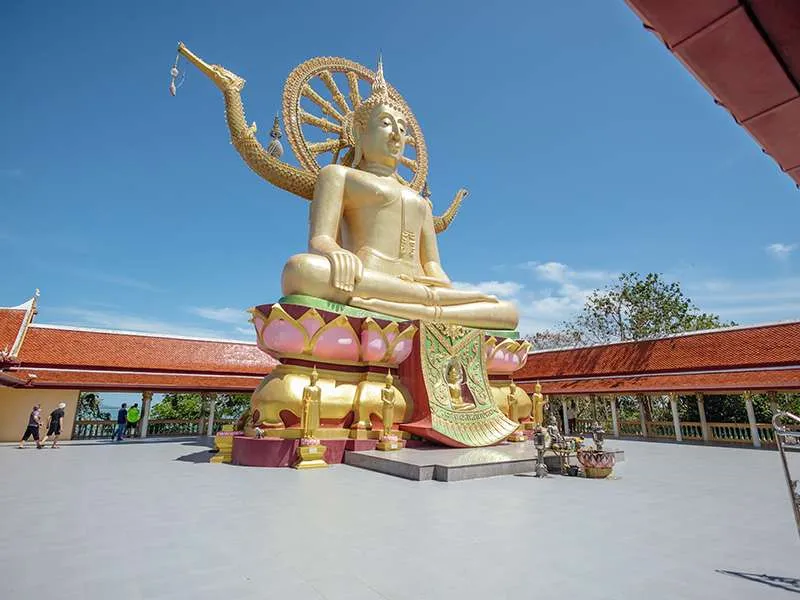
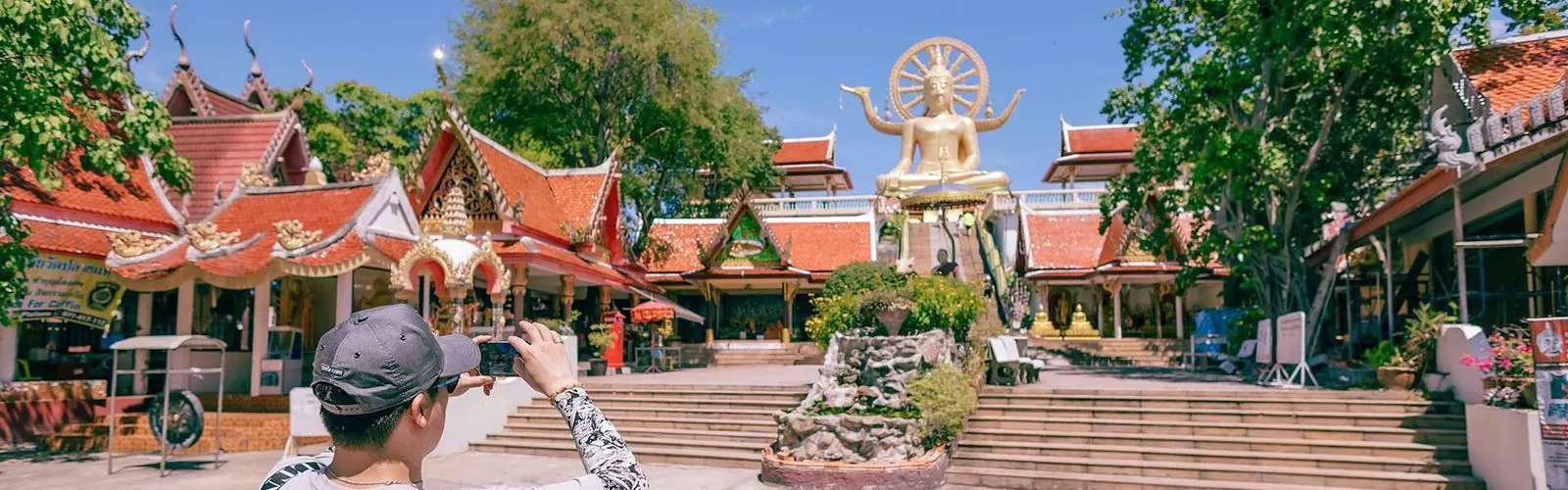
The golden Big Buddha on Koh Samui sits on the island’s north-east tip and is its best-known landmark. The temple’s official name is Wat Phra Yai (“temple of the big Buddha”). It stands on Koh Faan, a tiny islet joined to Samui by a short causeway near Bang Rak, the beach also known as Big Buddha Beach.
Quick answer: Wat Phra Yai is free to enter, and 30–60 minutes is enough to see it. Cover your shoulders and knees, and take your shoes off before you step onto the shrine platform. The temple does not publish opening hours online, so go in daylight and check locally. Early morning and late afternoon are cooler and quieter. It is about 3 km north of Samui airport and a few minutes from Wat Plai Laem.
Quick facts
| Name | Wat Phra Yai (Big Buddha Temple) |
| Location | Koh Faan islet, Bang Rak, north-east Koh Samui, about 3 km north of Samui International Airport |
| The statue | A seated, gold-painted Buddha about 12 metres tall, built in 1972 |
| Entry | Free, donations welcome |
| Opening hours | No official hours published online. Visit in daylight and check locally |
| Dress code | Shoulders and knees covered, shoes off on the shrine platform |
| Time needed | About 30–60 minutes |
| Nearby | Wat Plai Laem, Fisherman’s Village in Bophut, Bang Rak beach |
What you’ll see
The causeway and the naga staircase
You cross a short causeway with the sea on both sides and arrive at a cluster of shops, stalls and shrines at the foot of the statue. A staircase lined with naga, the serpent guardians of Thai temples, climbs to the platform around the Buddha’s base. The stone steps are steep and get slippery after rain. Take them slowly.
The Big Buddha
The statue stands about 12 metres high and has been a landmark since it was finished in 1972 (Wikipedia: Wat Phra Yai). Some guides quote a slightly bigger figure, which may include the base. Look at the hands. The left rests palm up in the lap, and the right reaches down over the knee towards the ground. This is the Mara posture, also called “calling the earth to witness”. It shows the moment the Buddha, faced with the temptations and fears sent by Mara, stayed calm and touched the earth as witness to his enlightenment.
From the platform you look out over Bang Rak bay and, on a clear day, north towards Koh Phangan.
Around the platform
- Bells: rows of them at the back of the temple. Many visitors ring them as they walk past.
- A smaller Maitreya statue of the future Buddha.
- Shrines and offerings: people come to light incense and leave flowers. Watch quietly, or join in if you like.
- Stalls selling amulets, Buddhist items and souvenirs, with snack and drink shops below.
Dress code and etiquette
Wat Phra Yai is a working temple as well as a sight, and the usual Thai rules on modest dress apply here too (Thai Holiday Guide, reviewed July 2026):
- Cover shoulders and knees. No vests, crop tops, short shorts or short skirts. A light shirt with long trousers, a long skirt, or a sarong over shorts will do.
- Shoes off before you step onto the shrine platform or into any building with images. Slip-on sandals make this quick.
- Bring your own cover-up. Don’t count on borrowing a sarong at the gate.
- Be respectful with Buddha images. Don’t climb on statues, sit with your feet pointing at an image, or pose in a way that could look disrespectful.
- Keep your voice down around people who are praying, and ask before you photograph monks or worshippers.
The platform tiles get very hot in the midday sun. Bare feet are fine in the morning. At noon you will be hopping.
What to bring
- A sarong, scarf or light long-sleeved shirt to cover up
- Slip-on shoes or sandals
- Water, a hat and sunscreen, because the platform has little shade
- Small notes and coins for donations, drinks or parking
Opening hours and when to go
We have not found opening hours published online by the temple, so we don’t quote any. People normally visit in daylight. If you plan to arrive very early or late, check locally first.
- Early morning: the coolest time, with soft light on the gold and fewer people.
- Late afternoon: warm light and sunset colours over the bay. Follow it with a sunset drink in Bang Rak or Bophut.
- Midday: the hottest time, and the busiest with tour groups. There is little shade on the steps or the platform.
- Rainy days: fine for a short visit between showers. Watch your footing on the wet steps. For other options, see our Koh Samui rainy day ideas.
How to get to the Big Buddha on Koh Samui
The Big Buddha is on Samui’s north-east corner, about 3 km north of the airport and a short drive from Bophut and Chaweng. Taxi, hire car and scooter all work, and there is parking near the causeway. On a scooter, wear a helmet. Thai law requires one.
The temple slots easily into a day of sightseeing and is on many island tours. Our list of things to do in Koh Samui covers other sights nearby.
Combine it with nearby sights
- Wat Plai Laem is a few minutes’ drive away. With its 18-armed Guanyin statue and a lake full of fish, it makes a colourful contrast.
- Bang Rak (Big Buddha Beach) is right next door for a swim or a seafront lunch.
- Fisherman’s Village in Bophut is close by for dinner. Friday evening is the best night, when the Walking Street is on.
Visiting on our 4×4 island day
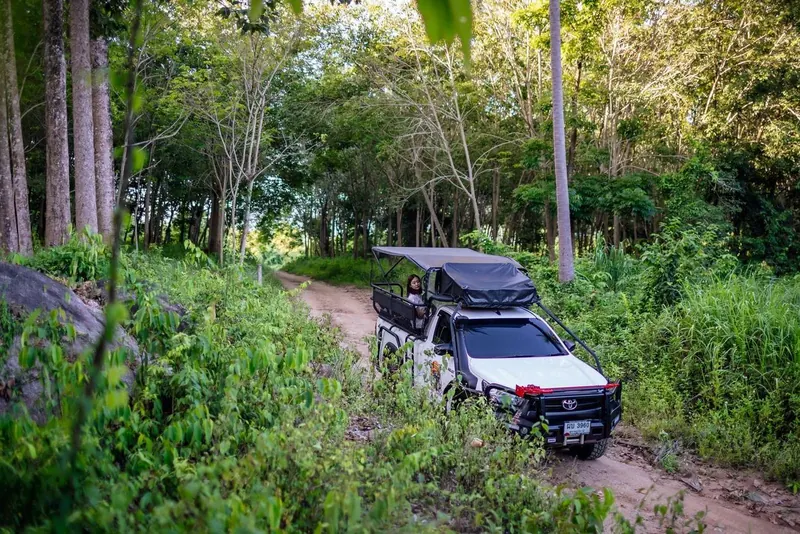
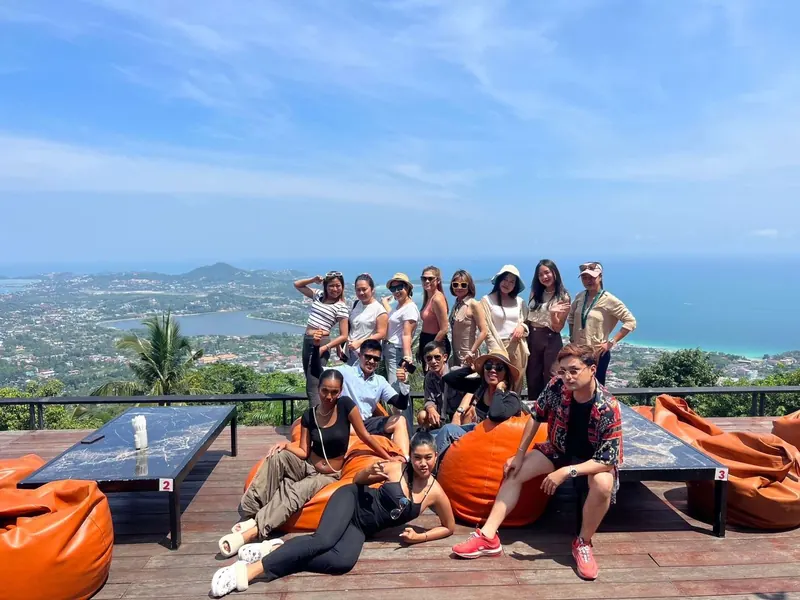
The Big Buddha is the first sightseeing stop on Samui Journey’s Explore the Real Samui 4×4 Island Safari. After that the trucks head inland with English- and Chinese-speaking guides. Stops include a village workshop, Wat Sawang Arom, a durian orchard and mountain-top temple, lunch with a view, Namuang Waterfall, a rubber-tapping demonstration and the Grandfather and Grandmother Rocks. Only have three days? Our 3-day itinerary shows how it fits alongside a boat day.
See the Big Buddha with a local guide
Our Explore the Real Samui 4×4 Island Safari starts at Wat Phra Yai, then moves on to temples, a village, a durian orchard, Namuang Waterfall and lunch with a view. Hotel transfers, guide, lunch and accident insurance are included. Adult (12+) from ฿1,950 · Child (5–11) ฿1,650 · Under 5 free. See the safari details or WhatsApp +66 94 751 4988.
FAQ
How much does it cost to visit the Big Buddha in Koh Samui?
Nothing, entry is free. Donations are welcome, and small change comes in handy for offerings, drinks or parking.
Can I wear shorts to the Big Buddha?
Not short shorts. Cover your knees and shoulders. The simplest options are knee-length shorts with a sarong or scarf on top, or loose long trousers.
How tall is Samui’s Big Buddha?
About 12 metres. It was built in 1972 and sits on a raised platform, so it looks bigger from the causeway.
Is the Big Buddha worth visiting?
Yes, especially if you pair it with Wat Plai Laem nearby. It’s quick and free, it gives you a first look at Thai Buddhist practice, and the platform has sea views.
Can children visit?
Yes. Hold small hands on the steep steps. Bring water and hats too, as there is little shade on the platform.
 Plan your trip