

Pig Island, officially Koh Madsum, is a small island off Koh Samui’s south coast where a group of free-roaming domestic pigs lives on the beach. It is a lovely stop, and most visitor questions come down to three. Can you feed the pigs on Pig Island? Can you swim with them? Can you pick them up? Each one is answered below with the Pig Island rules that matter on the day, and at the end there is a short visitor code to share with your group before you land.
| Can you feed the pigs? | Only with food the boat crew or island staff provide, and only when they say it is appropriate. Never bring your own snacks, and never offer meat or pork products. |
| Can you swim with them? | The pigs wade into the shallows to cool off, so you may share the water with them. They are not trained “swimming pigs”, so do not chase or lure them into deeper water. |
| Can you touch them? | A gentle touch on the back is fine if a pig comes to you. Do not pick up, ride or corner them, and leave piglets with their mothers. |
| Is there a fee? | Visitors arriving independently are usually asked for a small landing fee. One operator lists ฿50 per adult |
Is there an official rulebook for Pig Island?
As far as we know, there is no published, government-issued code of conduct for Koh Madsum. The island is outside Mu Ko Ang Thong National Marine Park, so national park rules do not apply directly. In practice, the island staff and your boat crew set the Pig Island rules on the day. Listen to them. They know the animals and will tell you what is and is not allowed at that moment.
The advice below builds on that, on basic animal welfare and on official guidance about pig disease and animal bites. Think of it as common sense written down.
Can you feed the pigs on Pig Island?
Only if the crew or island staff hand you the food. Bringing your own is an easy mistake to make, and there are three good reasons not to.
1. Human snacks are bad for pigs
Crisps, bread, biscuits, sweets and sugary drinks are not pig food. Salty, sugary and processed food is as unhealthy for a pig as it is for us, and a pig fed by every boat that lands can eat a lot of it in a day. Fruit with hard stones or cores can cause problems too.
2. Pork and meat can spread disease
This one surprises people. African swine fever (ASF) is a viral disease of pigs. According to the World Organisation for Animal Health (WOAH), it can spread when pigs eat material contaminated with the virus, such as food waste. WOAH advises against feeding pigs food scraps or kitchen waste that have not been properly treated, and notes that Thailand reported its first ASF outbreak in January 2022. ASF does not make people ill, but it is devastating for pigs. Never give a pig a ham sandwich, a sausage roll or pork crackling, here or anywhere else.
3. Feeding changes behaviour
Pigs learn quickly. When visitors arrive with food, adult pigs crowd in, push and sometimes nip. That is when bites and knocks are most likely, and small children are the easiest to knock over. Fewer hand-outs mean calmer animals.
If you are offered food to give, hold it on a flat palm with your fingers together, let the pig come to you, and keep the rest out of sight. Don’t carry food in pockets or bags either. Pigs have an excellent sense of smell.
Can you swim with the pigs?
Not in the way the famous Bahamas photos suggest. The Koh Madsum pigs spend most of their time on the sand and in the shade, and they wander into the shallows to cool down, especially in the heat of the day. You may find yourself paddling alongside one, and that is fine.
Setting up the photo is another matter. Do not chase a pig into the water, lure it out of its depth with food or hold it in the sea. Adult pigs are heavy, their hooves are hard, and a startled animal in the water can hurt a swimmer by accident. Give them space, stay in the shallows where you can stand, and let them choose how close to come.
If an operator guarantees “swimming with pigs”, be wary of how they treat the animals.
Can you touch, hold or pick up the pigs?
- Touching: a light touch on the back or side is usually tolerated if the pig has approached you. Avoid the face and ears.
- Holding or lifting: no. Pigs dislike being lifted. They struggle, and both you and the animal can get hurt.
- Riding or sitting on them: never.
- Piglets: look but do not touch. Sows are protective, and separating a piglet from its mother causes real distress.
- Sleeping pigs: leave them alone. You will get other photo chances.
Visiting with children
Children love Pig Island, but adult pigs are heavy and strong, and their heads are at a small child’s eye level. Brief children before you land. No running at the pigs, no food, and hands kept low and still. Stay between small children and the larger pigs, and move away calmly if the animals start to crowd. Our Koh Samui with kids guide has more ideas for planning family days out.
If a pig bites or scratches you
Bites are uncommon when visitors follow the advice above, but they do happen. The NHS advice on animal bites is to clean the wound straight away with soap and warm water, gently squeeze it so it bleeds a little, and cover it with a clean dressing. Get medical advice if the skin is broken, especially on the hands, feet or face, or if there are signs of infection such as swelling, heat or discharge. A doctor will check whether you need protection against tetanus or rabies.
Tell your boat crew straight away. On the Samui Journey catamaran there is a first-aid kit on board, and accident insurance is included in the trip price.
Pig Island rules: the visitor code
- Bring no food for the pigs. Use only what the crew or island staff provide.
- Never offer meat or pork products.
- Let the pigs come to you. No chasing, cornering or luring.
- No lifting, riding or holding.
- Leave piglets and sleeping pigs in peace.
- Keep the sea encounter natural. Stay in the shallows and give pigs space in the water.
- Supervise children closely.
- Take all your rubbish back to the boat. Plastic on the beach ends up in the sea or in a pig.
- Respect private areas. Stay within the public beach.
- Follow the crew. If they say it is time to give the pigs a break, it is.
The same thinking applies to other animal visits. If you are also planning an elephant visit, our guide to choosing an ethical elephant sanctuary works on the same principle, that the animal’s welfare comes before the photo.
How to visit Pig Island
You need a boat. Independent travellers can hire a longtail or join a speedboat from Thong Krut. Bring cash for the small landing fee, which one operator lists at ฿50 per adult. Many visitors combine the island with snorkelling at Koh Tan next door. For background on the island itself, getting there and when to go, read our full Pig Island guide.
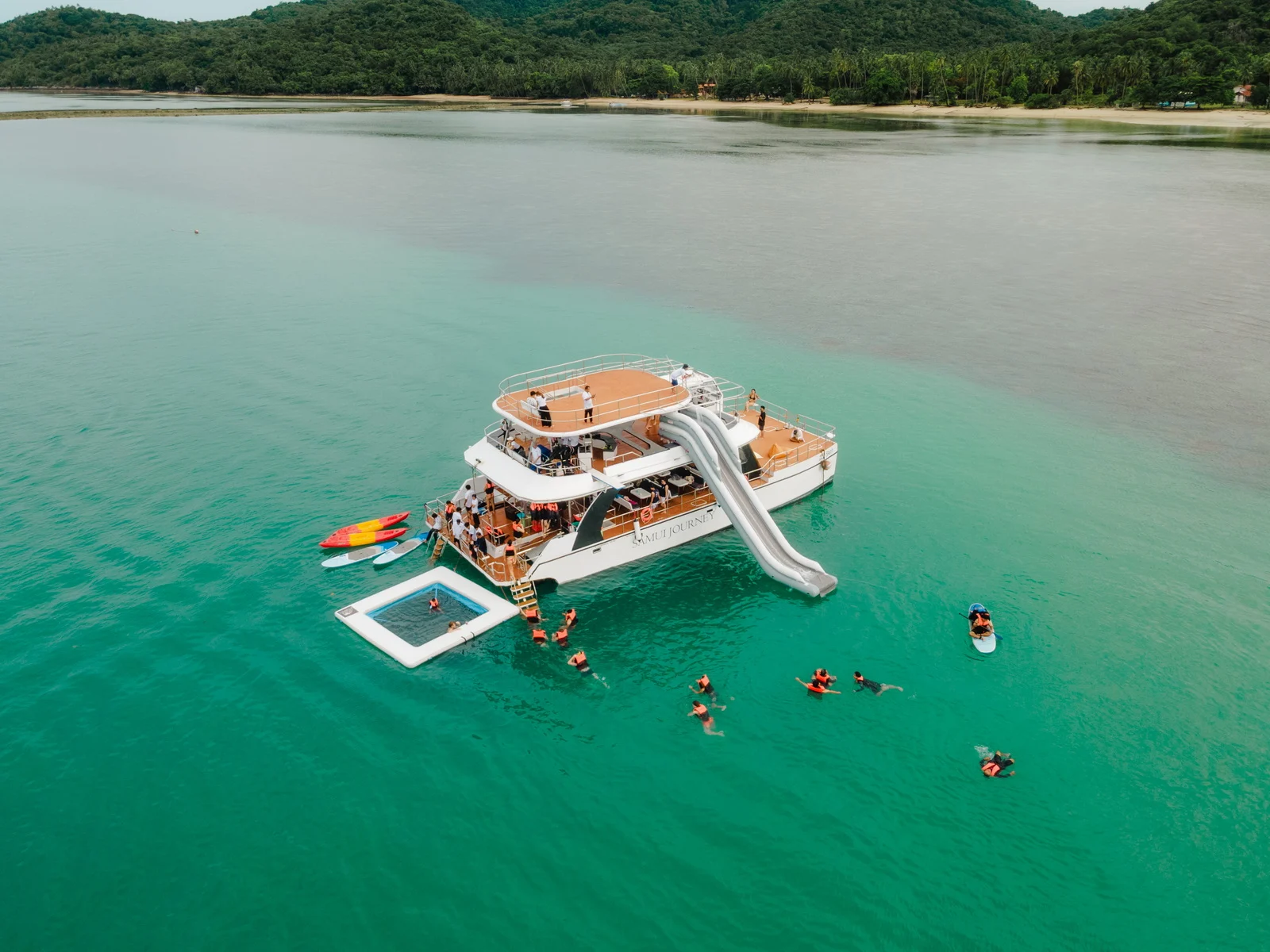
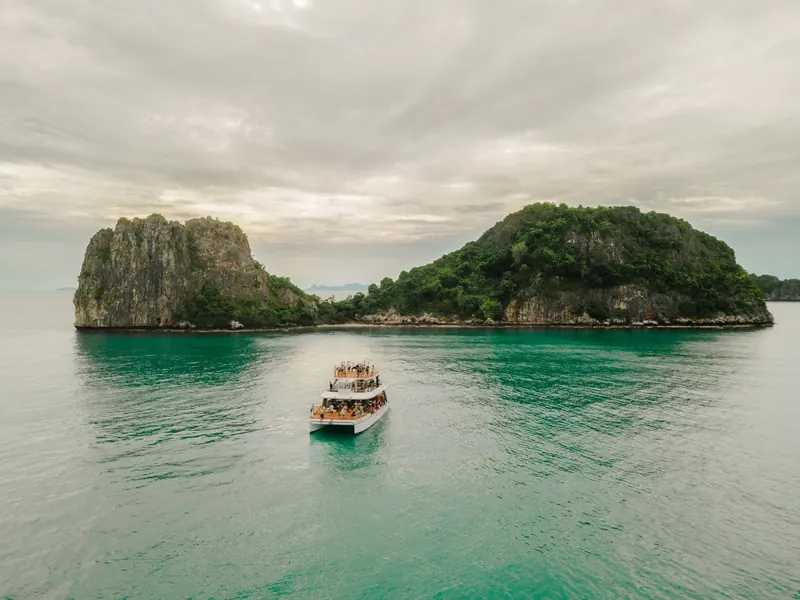
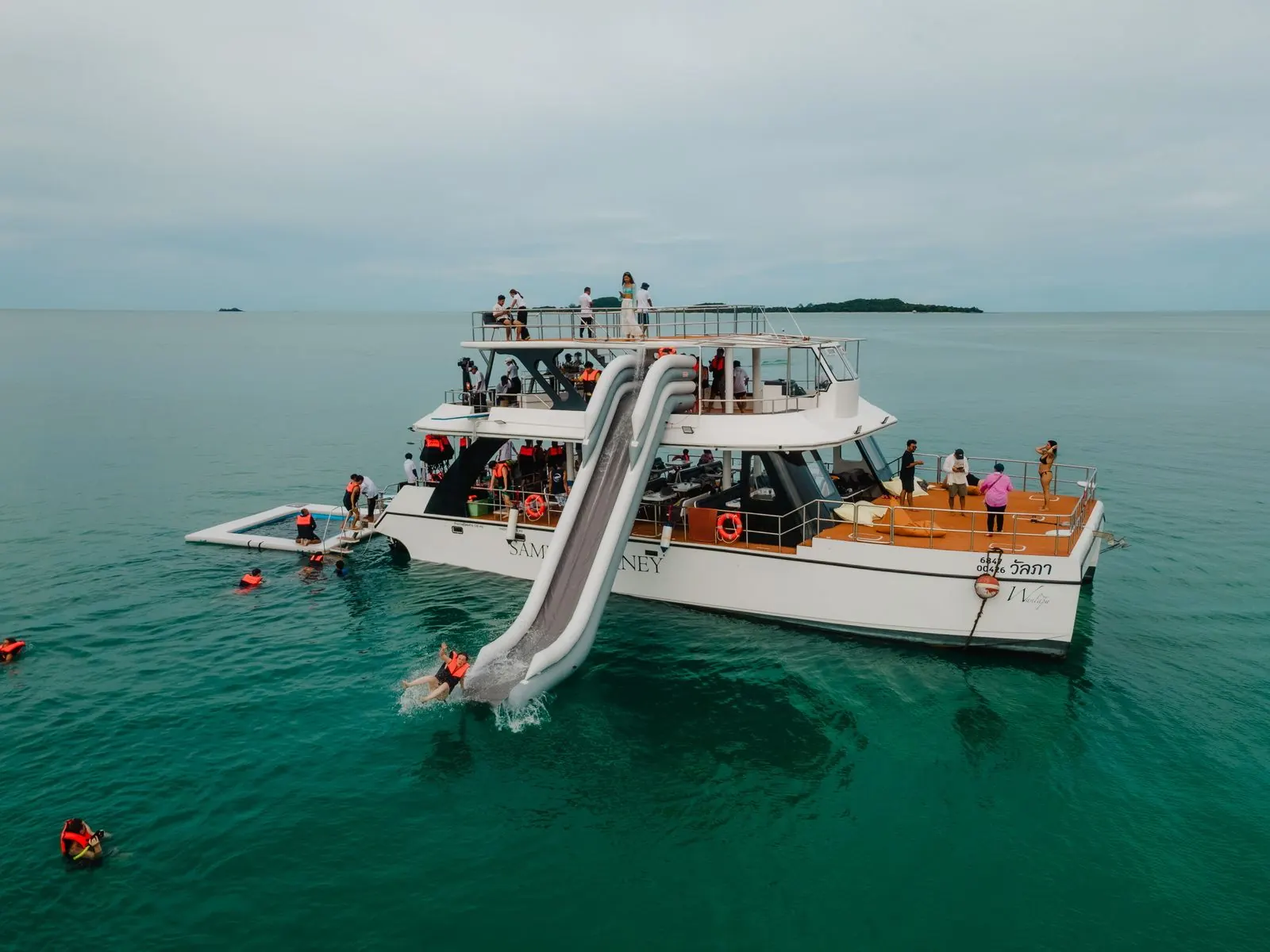
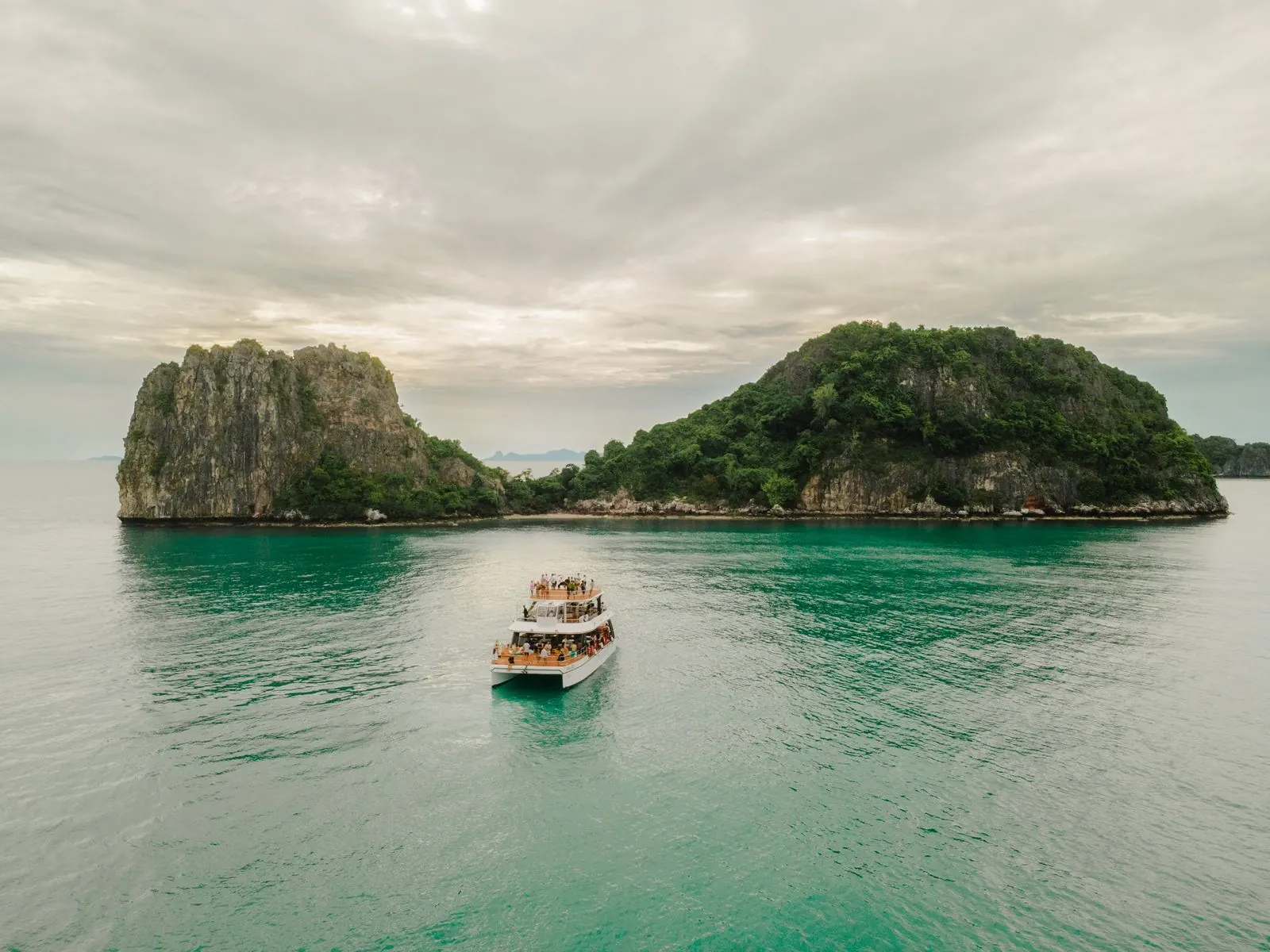
The Samui Journey 1-Day Catamaran leaves from Bang Kao Pier and makes Pig Island one of its three stops, along with the Five Islands and Koh Tan. Hotel pickup is between about 9:00 and 9:40 AM, depending on your hotel area, and you are back at your hotel at around 4:30 PM. Lunch, drinks, accident insurance and transfers are included. Full details are on our Pig Island tour page.
Meet the pigs the responsible way.
Five Islands, Koh Tan and Pig Island in one day, with a licensed captain (10+ years), life jackets for everyone, lunch, drinks and hotel transfers. Adults ฿3,300, children (5–11) ฿1,900, under-5s free. See the 1-Day Catamaran or ask us on WhatsApp at +66 94 751 4988.
FAQ
Can you feed the pigs on Pig Island, Koh Samui?
Only with food that the boat crew or island staff provide, and only if they say it is appropriate. Do not bring your own snacks, and never offer meat or pork.
Do the pigs on Koh Madsum swim?
Only in the shallows. They wade in to cool off, but they are not “swimming pigs” like those in the Bahamas. Do not chase or lure them into deeper water.
Is it safe to touch the pigs?
Generally, yes, if a pig approaches you and you touch it gently on the back. Avoid the face, do not lift them, and keep away from piglets and their mothers.
Do the pigs bite?
They can, usually when food is involved or they feel crowded. Keep food out of sight and your hands low and calm. If you are bitten, clean the wound straight away and get medical advice.
Is Pig Island suitable for young children?
Yes, with close supervision. Brief children before landing and stay between them and the larger pigs.
Is there an entrance fee for Pig Island?
Independent visitors are usually asked for a small cash landing fee. One operator lists ฿50 per adult. Fees can change, so ask your boat operator before you go.
 Islands & boats