

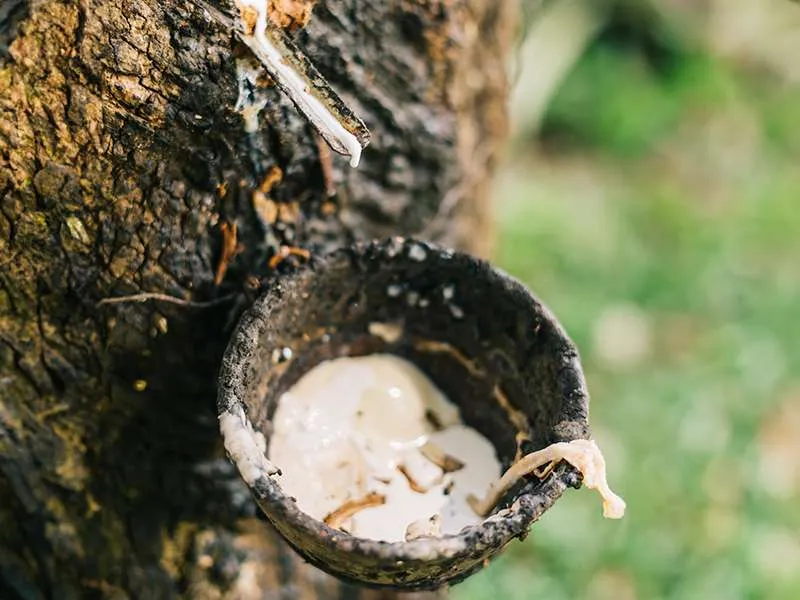
Rubber tapping is an interesting and vital part of the rubber production process. Here’s an overview of how rubber tapping is typically conducted:
Rubber Tree Plantations:
- Planting: Rubber trees, scientifically known as Hevea brasiliensis, are cultivated in plantations. These trees are native to South America but are commonly grown in tropical regions worldwide.
Tapping Process:
- Maturity: Rubber trees are ready for tapping when they reach approximately six years of age. At this point, they are mature enough to produce latex.
- Tapping Tools: Tappers use a series of specialized tools for the process. The primary tool is a tapping knife, which is used to make incisions in the tree’s bark.
- Incisions: Tappers make a series of diagonal cuts on the tree’s bark. These cuts create channels for the latex to flow out.
- Latex Flow: The latex, a milky white substance, flows out of the incisions and into a collection cup or container attached to the tree. This process is typically done in the early morning when latex flow is most active.
- Collection: Tappers revisit the trees periodically to collect the latex that has accumulated in the cups. The latex is then transferred to larger containers for further processing.
Sustainability Practices:
- Rotation: To ensure the health and longevity of the rubber trees, tappers practice a systematic rotation. Trees are tapped in a spiral pattern, allowing the bark to heal between tappings.
- Management: Sustainable rubber plantations implement responsible management practices, including measures to prevent diseases and pests that can affect rubber trees.
Latex Processing:
- Coagulation: The collected latex is then treated to coagulate the rubber particles. This coagulated latex is then rolled into sheets and dried.
- Smoking Process: The sheets of rubber are often subjected to a smoking process to improve their strength and durability.
- Packing: The processed rubber is packed and ready for transportation to factories where it will be further processed into various rubber products.
Environmental Considerations:
- Sustainable Practices: Some rubber plantations adhere to sustainable practices, considering the environmental impact of rubber production. This includes minimizing deforestation, protecting biodiversity, and employing eco-friendly methods.
Visitors to rubber plantations in regions where rubber is a major industry may have the opportunity to observe the rubber tapping process firsthand. It provides insight into the traditional methods and sustainability efforts within the rubber industry. Keep in mind that the level of access and the ability to observe the process may vary depending on the specific plantation and its policies.
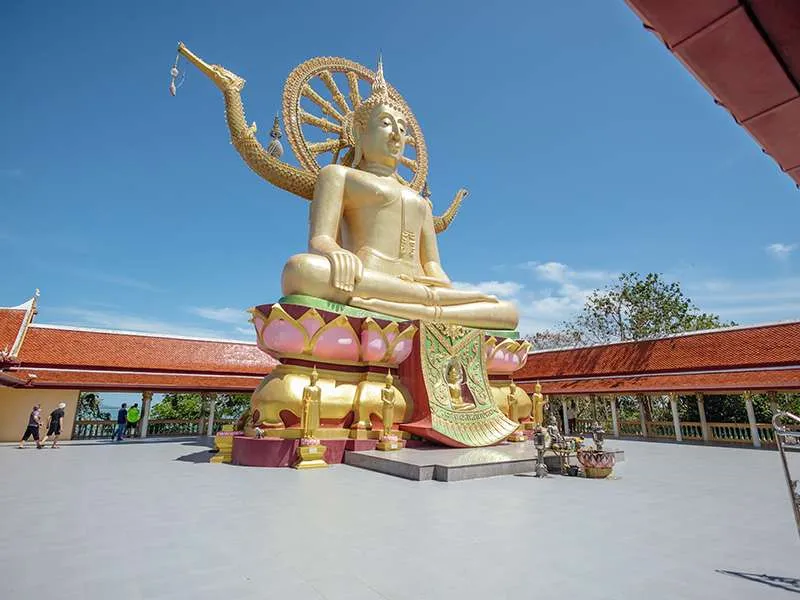 Koh Samui
 Koh Samui
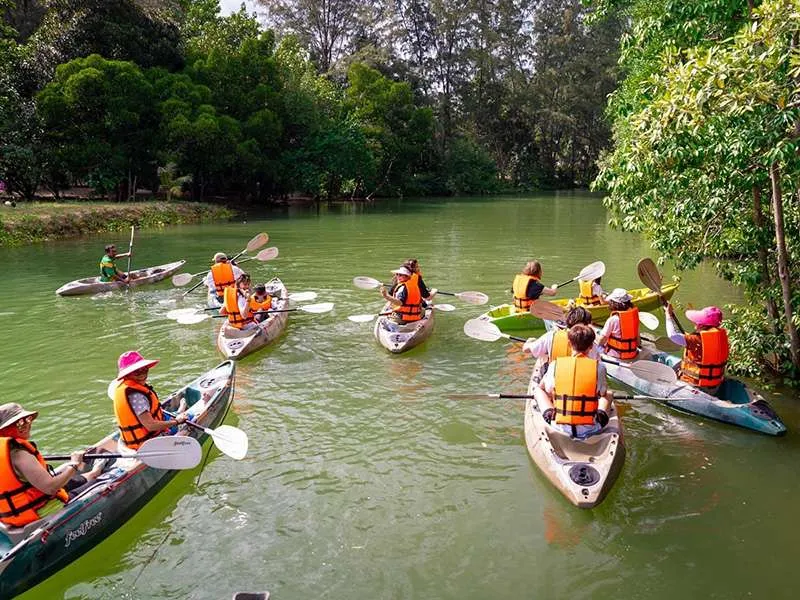 Koh Samui